
Last updated on February 4th, 2026 at 06:22 pm
The Official MacGregor Tartans
By Sir Malcolm MacGregor of MacGregor, Hereditary Chief of Clan Gregor
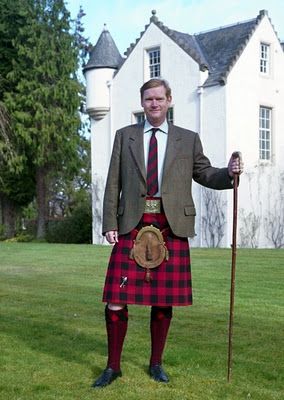 Wearing a clan tartan is a visible expression of loyalty to a Clan Chief. As the Lord Lyon has noted, any tartan that bears a clan’s name should do so only with the Chief’s explicit permission. The tartans shown here are the only patterns formally recognized by the Chief of Clan Gregor.
This overview was originally prepared in 2004 for the American Clan Gregor Society to clarify long‑standing confusion about MacGregor tartans and heraldic matters. Over the years, my research has continued—most notably through discussions with Mr. Peter MacDonald of the Scottish Tartans Authority, whose expertise has been invaluable.
While this article does not attempt a full historical survey of tartan, it is important to understand the broader context. Tartan, as we think of it today, did not become associated with specific clans until the late 18th century—a development driven largely by commercial interests. It was, in fact, one of Scotland’s great marketing successes.
Scottish regiments played a central role in popularizing tartan, using it as a practical military uniform that created visual cohesion on the battlefield. Contrary to modern assumptions, clans of the earlier centuries were not uniformly dressed in fixed patterns; that idea is a romantic construction of the early 1800s. Ironically, tartan—once banned as a symbol of Jacobite rebellion—later became an emblem of regimental pride and Scottish identity.
After the upheavals of the 1745 Rising, clan structures were severely weakened. As chiefs and clan families rebuilt their identities—often from positions of influence within the expanding British Empire—many enthusiastically embraced the emerging “clan tartan” tradition. Some even commissioned personal tartans. The Chiefs of Clan Gregor, however, continued to wear the patterns established by Sir John and Sir Evan MacGregor, maintaining a direct thread of tradition.
With the decline of authoritative bodies such as the former Scottish Tartans Society and the rapid global commercial production of tartans, errors and misattributions multiplied. It is neither practical nor possible for any chief to monitor every tartan produced abroad. This is why clarity and authoritative guidance remain essential.
Today, the four tartans officially recognized as MacGregor tartans are those listed below.
The Four Official MacGregor Tartans
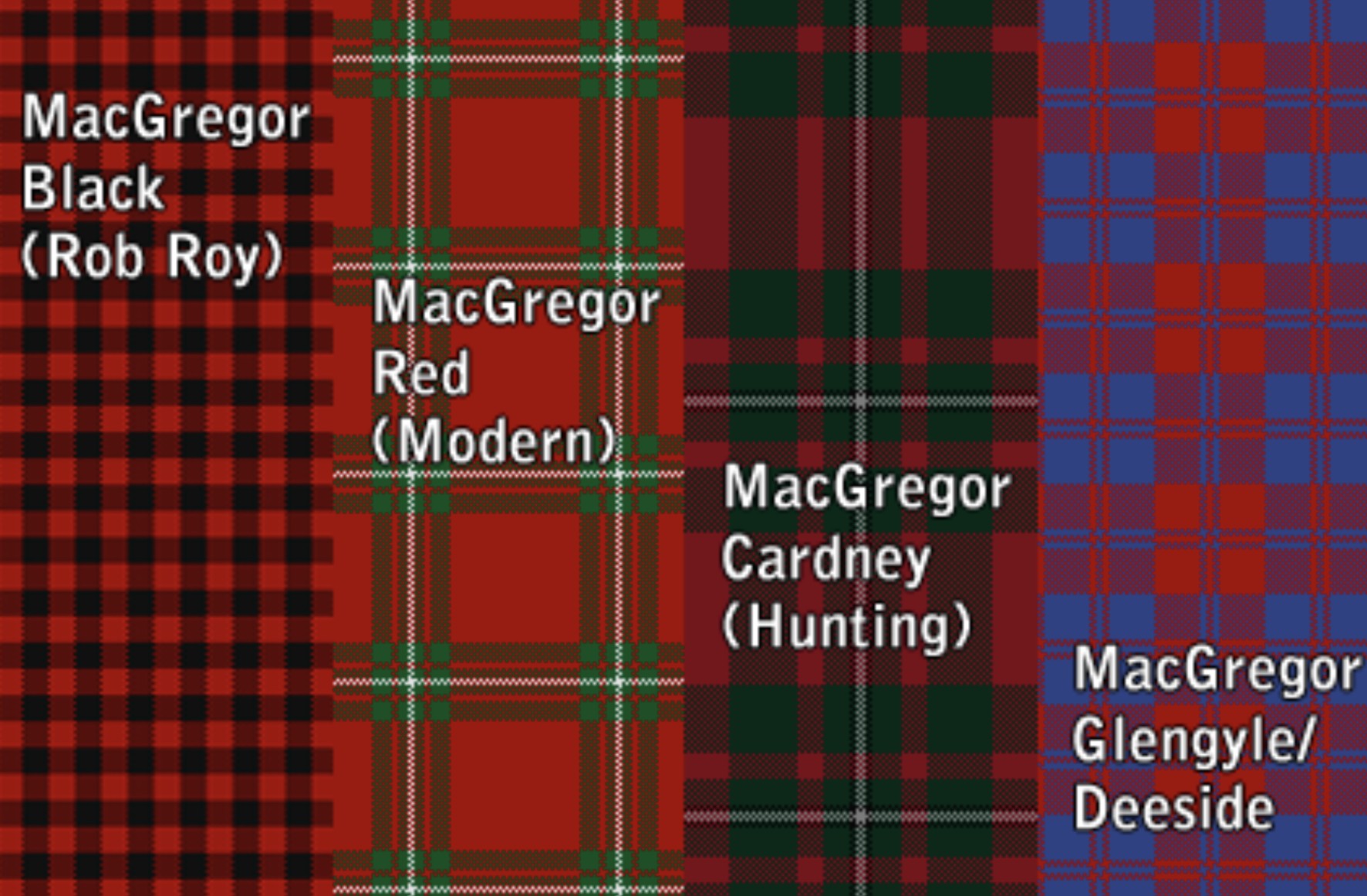
1. MacGregor Red and Black
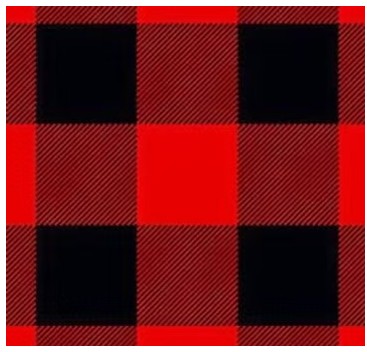
This is one of the oldest tartans associated with Clan Gregor, predating the notion of clan-specific patterns. Its simple, striking sett may explain its widespread early use throughout the Highlands. Although portraits exist of various Highland figures—monarchs included—wearing similar patterns, its long-standing connection to the MacGregors is well established.
During the period of proscription, such a bold and easily woven pattern may have been adopted by MacGregors for practical reasons, especially given the difficulty of enforcing bans in remote regions. By the late 18th century, my own ancestors were wearing this sett for reasons rooted firmly in tradition.
The Highland Society of London included this tartan in its 1816 collection. Later, commercial interest—especially fueled by the popularity of Sir Walter Scott’s Rob Roy—led merchants to market the pattern as “Rob Roy,” despite contemporary authorities objecting to the renaming.
Correct name: MacGregor Red and Black.
2. MacGregor Red and Green
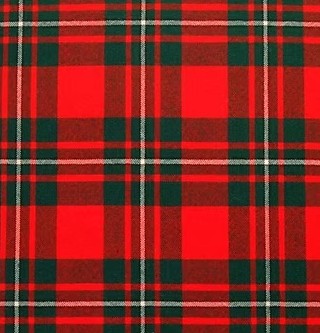
The origins of this tartan are somewhat obscure, though paintings confirm its use by the early 1800s. The vivid red—originally produced using costly cochineal dye—was a visible mark of status.
A sample appears in the Cockburn Collection, created around the same time as the Highland Society’s Red and Black specimen. Wilsons of Bannockburn later recorded this tartan as “MacGregor-Murray,” indicating early family usage. Sir Evan MacGregor Murray, 2nd Baronet, wore it while commanding the MacGregor Guard of Honour during King George IV’s historic visit to Edinburgh in 1822.
Correct name: MacGregor Red and Green.
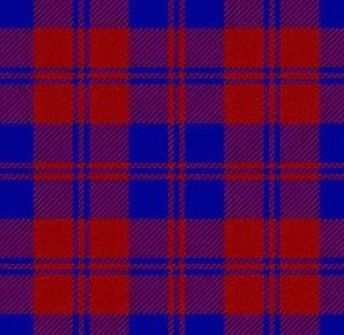
3. MacGregor of Glengyle
Formerly referred to informally as “Glengyle/Deeside,” this tartan is now properly identified as MacGregor of Glengyle. While the historical Deeside connection involving Glengyle MacGregors transported north in 1624 is genuine, it should not be used to define the tartan.
A preserved specimen—red and dark blue—came into my family’s possession through the Scottish artist Skeoch Cumming in 1922, who obtained it from a woman in Nairn whose ancestors hailed from Glengyle. Andersons of Edinburgh hold another sample believed to date from around 1750.
Correct name: MacGregor of Glengyle.
4. MacGregor of Cardney
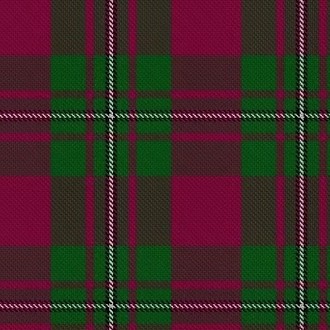
This tartan has often been mistakenly marketed as “MacGregor Hunting,” particularly in a burgundy-toned variation. This name is inaccurate: our clan has never adopted “hunting,” “dress,” “undress,” or similar variants.
The actual history is far more personal. My great‑uncle, Alasdair MacGregor of Cardney, commissioned a batch of red and green tartan using wool from his own sheep and dyes based on early traditional methods. The first dye bath produced an unexpectedly bright pink, which he overdyed to achieve the rich wine tone now associated with the Cardney sett. He liked the result enough to have a full bolt woven, and the family has worn it ever since.
Because of earlier mislabeling—particularly during the formation of the Scottish Tartans Society in 1966—many MacGregors purchased this tartan believing it to be the official “hunting” pattern. Anyone who has worn it in good faith should feel free to continue doing so.
Correct name: MacGregor of Cardney.
Summary of Official Status
Authority over clan tartans rests with the Chief of Clan Gregor. Only the following four tartans are officially recognized:
- MacGregor Red and Black
- MacGregor Red and Green
- MacGregor of Glengyle
- MacGregor of Cardney
A special exception exists for the MacGregor Dance Tartan (green and white), approved solely for Highland dancers competing in formal events.
Patterns marketed under other names—such as “Lady MacGregor”—should be approached with caution, as they do not reflect clan tradition or the Chief’s approval.
Tartan remains a potent symbol of identity. Around the world, it represents Scottish heritage, clan loyalty, and the enduring spirit of Highland culture. Those who wear MacGregor tartan declare a connection to our shared history—something not to be treated lightly.