
Last updated on February 4th, 2026 at 06:26 pm
The Proscription of the MacGregor Name
A Historical Essay by Rick Walker
The proscription of the MacGregor name in the early seventeenth century stands as one of the most severe collective punishments in Scottish history. For Clan MacGregor, it was not merely a political act but the culmination of centuries of dispossession, rivalry, and persecution. From their perspective, the events leading to the royal ban represent a long arc of injustice—beginning with the loss of ancestral lands and ending with the attempt to outlaw their very identity. The story is at once a tale of state power, clan ambition, and the resilience of a people who refused to disappear.
Early Dispossession and Campbell Expansion
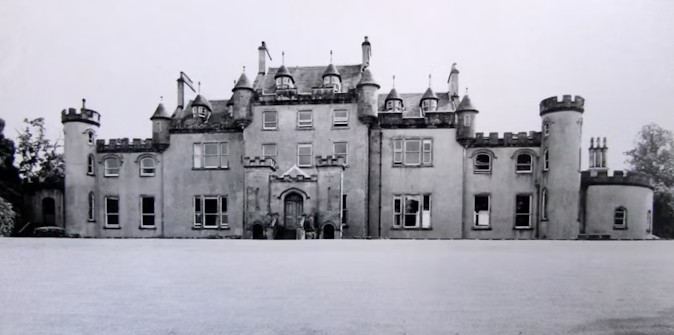
The roots of the crisis stretch back to the fourteenth century, when Robert the Bruce granted the Barony of Loch Awe—long part of MacGregor territory—to Neil Campbell, one of his loyal supporters. In the Gaelic system of hereditary territorial rights, this royal redistribution was an affront, superseding older native customs with the king’s feudal authority. For the MacGregors, it marked the beginning of a pattern: their ancient lands in Glenorchy, Glenlochy, and Glenstrae steadily fell under Campbell control, not through warfare alone but through legal charters, royal favor, and political maneuvering.
As the Campbells rose to become one of the most powerful landholding families in the Highlands, many MacGregors were reduced to tenants on what had once been their own soil. By the sixteenth century, the clan’s fortunes had declined so sharply that they clung to a fraction of their former territory. From the MacGregor viewpoint, this was not merely an economic misfortune—it was a systematic dismantling of their patrimony, orchestrated by rivals whose influence extended deep into the crown’s administrative and judicial machinery.
Feuding, Retaliation, and Royal Scrutiny
The sixteenth century saw these tensions erupt repeatedly. A particularly grievous episode occurred when Grey Colin Campbell murdered the brother of Gregor Roy MacGregor. This act ignited an eight-year cycle of raids, reprisals, and blood-feuding throughout the Central Highlands. While feuds were not uncommon among Highland clans, the MacGregors felt the weight of royal disfavor far more than their opponents. Campbell influence at court meant that legal judgments often fell disproportionately against them.
Economic hardship further strained the situation. As landless men in a region where cattle represented wealth, some MacGregors resorted to raiding—a customary Highland practice but one punished harshly when committed by already-suspect clans. In 1590, John Drummond, the king’s forester, caught several MacGregors poaching and ordered them hanged. The clan retaliated by killing Drummond. King James VI held the MacGregor chief responsible but ultimately pardoned him, signaling that even amid rising tensions, the crown had not yet resolved to destroy the clan outright.
The Road to Glen Fruin
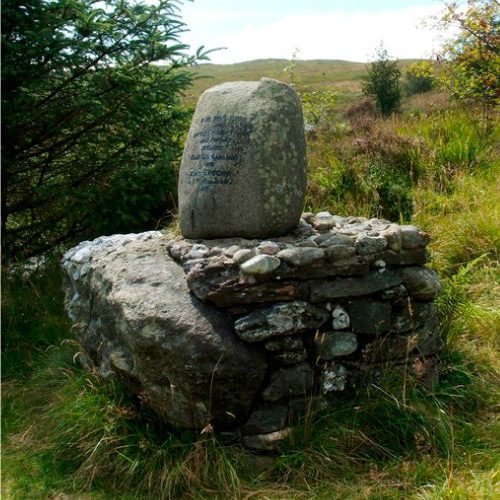
The decisive turn came from a chain of grievances involving Clan Colquhoun. In 1592, a MacGregor arrow accidentally killed a Colquhoun during a cattle raid—a tragic incident that, though unintended, was neither forgotten nor forgiven. Ten years later, in 1602, two MacGregor travelers sought shelter on Colquhoun lands, invoking the ancient right of Highland Hospitality. They were refused, discovered seeking refuge in a barn, and executed for slaughtering a sheep to survive. To the MacGregors, this was a deliberate breach of sacred custom and a fresh humiliation added to many others.
Alisdair MacGregor of Glenstrae, the clan chief, was urged by Archibald Campbell, Earl of Argyll, to respond. Argyll portrayed himself as a mediator encouraging lawful redress, but his motives were far from impartial. He knew the Colquhouns had already received a royal commission to act against the MacGregors, and by nudging Alisdair into confrontation, he prepared the ground for the clan’s downfall.
The Battle and Its Aftermath
On February 7, 1603, the MacGregors and their MacFarlane allies met the Colquhoun forces at Glen Fruin. Although outnumbered, the MacGregors prevailed through superior tactics and discipline. Yet victory turned to tragedy: the battle devolved into a bloodbath, with losses on the Colquhoun side so severe that the event became notorious across Scotland. From the MacGregor perspective, what began as an attempt at justice had spiraled into an unintended disaster—one that their enemies were eager to exploit.
King James VI, already concerned about Highland disorder and eager to assert royal authority, seized upon Glen Fruin as justification for decisive action. Within weeks, he issued the most sweeping clan punishment ever enacted in Scotland.
The Proscription of 1603
The proscription declared the name “MacGregor” illegal. Its consequences were unprecedented:
- The MacGregor chief, Alisdair, was executed along with many leading clansmen.
- Anyone bearing the name “MacGregor” was subject to death.
- Clan members were forbidden to gather, bear arms, or claim kinship.
- All MacGregors were required to adopt other surnames, often names chosen or approved by Campbell authorities.
- The clan’s lands and possessions were forfeit.
This was not merely a political sanction. It was an attempt to eradicate a clan’s identity.
From the MacGregor perspective, the proscription represented the culmination of centuries of Campbell ambition and royal manipulation. Their enemies had succeeded in using the law to destroy them not only as landholders but as a people. To be born a MacGregor was, for generations, to inherit the threat of execution.
 Persecution and Clan Memory
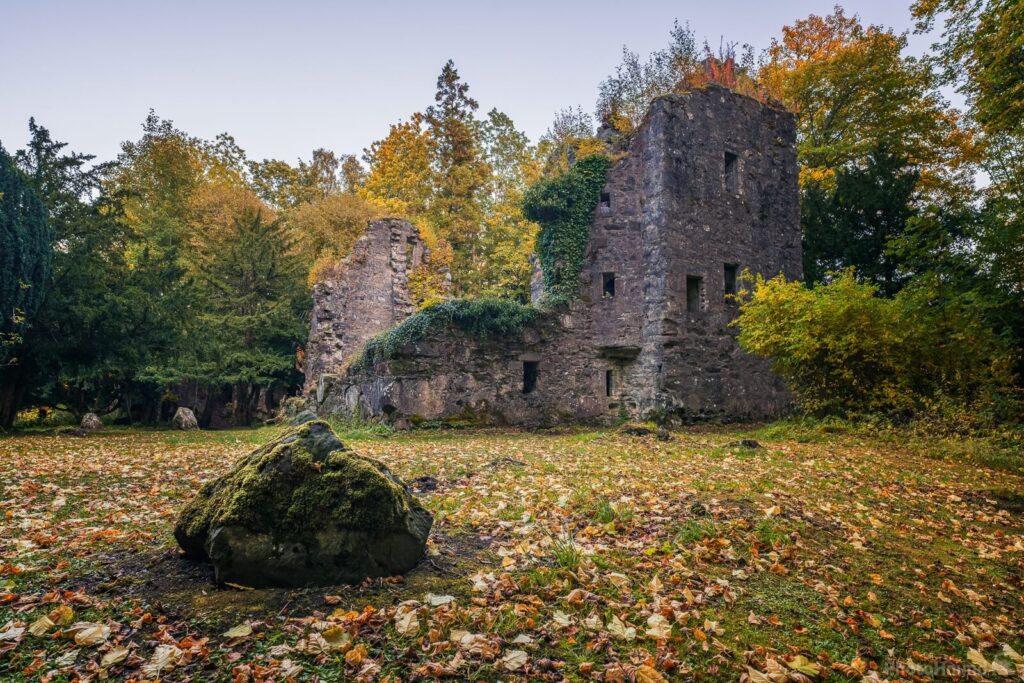
Highland tradition preserves the brutal imagery that defined this era. Stories tell of Campbell bloodhounds suckled on the milk of MacGregor women so the animals could better track their prey—a symbolic expression of the clan’s view of Campbell cruelty. At Finlarig Castle, “Black” Duncan Campbell of Glenorchy allegedly kept a stone-lined beheading pit where MacGregors were executed for the entertainment of dinner guests. Though such tales blend fact and legend, their endurance reflects the depth of trauma inflicted on the clan.
Survival Under Outlawry
Despite the ban, the MacGregor identity did not vanish. Members of the clan survived through aliases (see Sept List), quiet resilience, and the preservation of oral history. They continued to recognize each other even when the law denied them the right to do so. This era forged a sense of unity that later became central to their identity.
The proscription was relaxed in 1661, reinstated in 1693, and finally lifted in 1774. Yet its legacy endured far longer. When the MacGregors later adopted the motto “’S Rioghal Mo Dhream”—My Race is Royal, it was an expression of defiance, dignity, and endurance.
Conclusion
The proscription of the MacGregor name stands as one of the most dramatic examples of collective punishment in Scottish history. Viewed from the MacGregor perspective, it was not an isolated decree but the final act in a long saga of dispossession and manipulation. Yet it was also the beginning of a narrative of survival. Against the full force of royal authority and the ambitions of powerful rivals, the MacGregors preserved their identity, their memory, and their pride. Their story is one of remarkable endurance—a testament to the strength of a name that kings once tried to extinguish.
