
Last updated on February 4th, 2026 at 06:27 pm
The Battle of Glen Fruin (1603): A Historical Essay
by Rick Walker
Introduction
On 7 February 1603, in a narrow valley west of Loch Lomond, two proud lineages met in a clash that would bend the arc of Highland history for generations. The Battle of Glen Fruin—Gleann Freòin, the glen of cold streams—pitted the Clan Gregor and its allies against the Clan Colquhoun and supporters from neighboring districts. Although the fight itself lasted only hours, its consequences stretched for nearly two centuries, culminating in proscription, exile, and the erasure of a name from the law before eventual restoration. To write about Glen Fruin is to reckon with the tension between fact and memory: archival bonds and royal commissions on one hand; oral testimony, clan chronicle, and nineteenth-century historiography on the other. It is also to acknowledge the ways in which identity—MacGregor identity in particular—absorbed both the triumph of the field and the catastrophe of the aftermath.
In what follows, I present a historical account grounded in contemporary administrative actions and later documentary syntheses, while carefully noting points of contention among sources. The narrative illustrates how local feuds could become instruments of larger political designs and how, conversely, royal policy could crystallize around a single episode of inter-clan violence. Glen Fruin sits at that intersection, and the people who stood there—Colquhoun and MacGregor—became the exemplars and victims of a new age of order. [1][2]
The Background to Conflict: Feud, Commission, and Calculus of Control
The late sixteenth century saw frequent contention along the Highland-Lowland frontier, where cattle-raiding, protection pacts, and shifting patronage aligned or collided with crown policy. By the 1590s, the Scottish monarchy increasingly sought to domesticate the Highlands. Royal authority, often exercised through powerful nobles acting as lieutenants, attempted to restrain clans deemed irreconcilable, including Clan Gregor. Archibald Campbell, 7th Earl of Argyll, received such responsibility: in January 1593 a commission charged him to hold those of the surname MacGregor to account, and in 1594 he undertook surety of £20,000 to guarantee peace in his sphere. In 1596 he became the King’s lieutenant “in the bounds of Clan Gregor ‘wherever situated,’” a sweeping remit that placed both liability and leverage in his hands. [1]
The mechanism of control became more explicit in April 1601 when Allaster (Alasdair) MacGregor of Glenstrae, clan chief, delivered a bail-bond for the whole clan to Argyll that risked forfeiture of lands upon any offense. The paradox, as later narratives tell it, is that this arrangement could enable the very hostilities it purported to suppress. Some sources allege that Argyll, rather than restraining the MacGregors, used his influence to direct their energies against Alexander Colquhoun of Luss, an established laird with court access and royal sympathy. The Luss Papers—estate records—chronicle repeated depredations attributed to MacGregor parties from 1594 through 1600, while other accounts emphasize reciprocal provocations and long-standing grievances. What is clear is that by 1602 the pace and scale of raiding rose, and the Colquhouns pressed their case to the king. [1][2]
James VI faced a governing dilemma familiar to centralizing monarchs: enforce pacification without igniting the Highlands. Parliament forbade the carrying of arms, yet in the face of Colquhoun complaints the crown granted him and his tenants permission to bear weapons for their defense—an exception whose symbolism was not lost on neighbors. In a realm where honor, necessity, and precedent mattered, the unequal dispensation of arms could inflame rather than cool a feud. That policy choice, many argue, helped prime the region for the violence that unfolded at both Glenfinlas (December 1602) and Glen Fruin (February 1603). [1][3]
Glenfinlas: Spark and Story
On 7 December 1602, a MacGregor-led raid struck the glen of Glenfinlas, a narrowing channel two miles west of Rossdhu and to the north of Glen Fruin. The party, said to comprise approximately eighty men under Duncan Mackewin MacGregor (tutor of Glenstra), sacked dwellings and carried off substantial stock: hundreds of cattle, horses, sheep, and goats. Two Colquhoun-aligned men were killed. This raid hardened positions—Colquhoun’s adherence was inflamed, the crown’s attention riveted, and the MacGregors, too, moved decisively toward mustering for what they saw as inevitable confrontation. [1]
Glenfinlas is also wrapped in a narrative preserved in literary memory: Walter Scott’s nineteenth century “factual” introduction to Rob Roy includes an episode in which two MacGregor clansmen traveling through Colquhoun lands, denied shelter, slaughtered a sheep for food and were summarily tried and executed by the Laird of Luss. Scott’s account, echoed in some clan retellings, positions this as the immediate cause of Glen Fruin—a moral trigger in a cycle of retaliation. Historians have debated this. William Fraser, a nineteenth-century historian of the Colquhouns, disputes Scott’s causal chain and contends that Sir Robert Gordon (a seventeenth-century historian whose narrative favors MacGregor perspectives) conflated the Glenfinlas raid with the later and larger collision at Glen Fruin. [1][2][4]
From the documentary side, Fraser points to a key political moment: on 21 December 1602, Alexander Colquhoun appeared before James VI at Stirling, accompanied by women bearing the bloodied shirts of those killed or wounded—an emotive display that underscored the government’s responsibility to protect its subjects. The king responded: he granted Colquhoun a commission of lieutenancy to repress crime and apprehend offenders. This set the stage for a legally sanctioned mobilization and—inescapably—a battle. [1][4]
Mobilization and the March to Glen Fruin
Early 1603 saw MacGregor musters on the move. Allaster MacGregor of Glenstrae led a substantial body that included allies, notably men of Clan Cameron. They were well-armed by Highland standards: hagbuts (arquebuses), pistols, murrions (helmets), mailcoats, axes, two-handed swords, and darlachs (dirks). Their likely approach followed the rough track along the west of Loch Long—what later tradition calls the Duke’s Road was not yet in place—and into the head of Glen Fruin, a glen with a constricting topography that would prove decisive. [1][5]
Colquhoun, empowered by royal commission, assembled a larger mustering, estimated at some 300 horse and 500 foot, to interdict and punish the raiders. Local burgesses from Dumbarton had been ordered to arm and armor themselves in anticipation—evidence that the conflict’s implications were felt beyond clan lines. The Colquhoun host entered the glen from the Luss side via the pass of Auchengaich, a tough approach that funneled movement and reduced the advantage of cavalry. [1]
MacGregor dispositions reveal a tactical understanding of terrain and movement: Allaster’s force deployed in two divisions—one holding the high ground at the head of the glen and another staged in ambush near Strone. The design was to block the Colquhoun exit at the glen’s upper end while a second force took a detour to fall upon the enemy’s rear—a classic envelopment in restricted ground. The plan required coordination and speed, and the constricted valley offered both cover and containment. [1]
Orders of Battle and Terrain: The Decisive Constraint
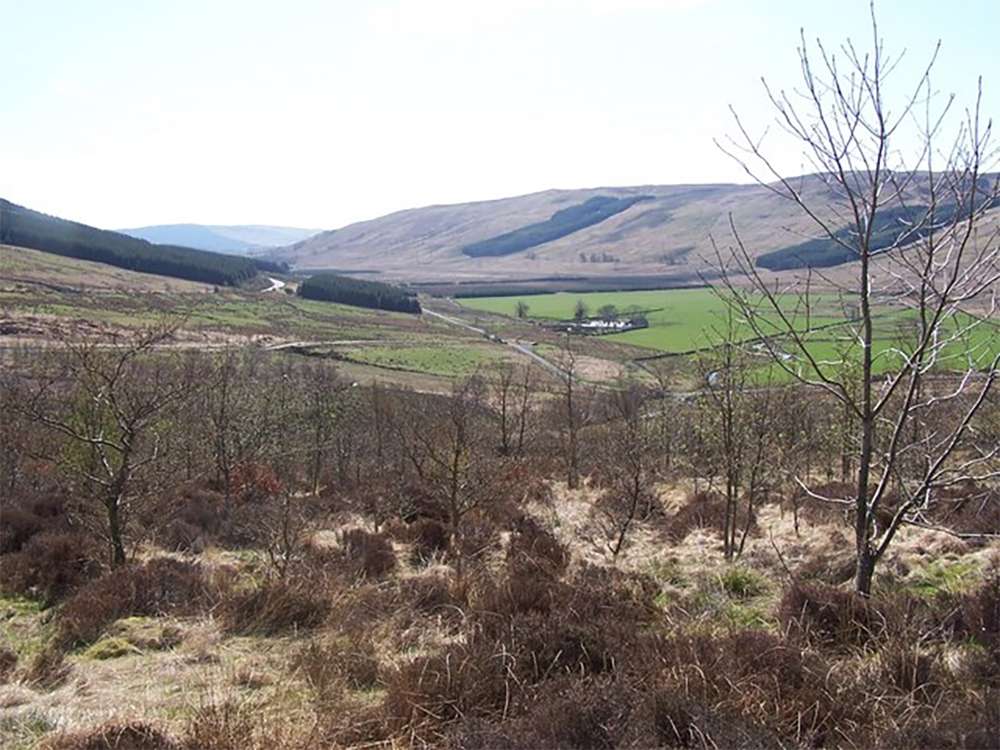
Glen Fruin—long and bottlenecked—is profoundly unfriendly to a mounted force maneuvering under pressure. In such terrain, cavalry cannot readily deploy in depth or exploit flanking space; any retreat risks collapse into the marshy ground and rippled channels of drainage where horses bog and formations disintegrate. The Colquhoun estimate of 300 horse and 500 footmen, while ample on open ground, inverted into liability at Auchengaich’s moss—a literal quagmire for a force trying to exit a fire sack. [1][5]
If the MacGregors numbered 300 to 400 foot, as some sources suggest, then they held the advantages of initiative, terrain, and tactical geometry despite being outnumbered overall. The decision to divide and to place John MacGregor with the ambush division around Strone gave Allaster the ability to saturate the near fight at the glen head while retaining a hammer to fall on the Colquhoun tail. In short, even if the Colquhouns had superior numbers, the field itself diminished that edge. [1]
The Battle of 7 February 1603: Compression and Collapse
The clash came fast. As Colquhoun’s force pushed through the pass, Allaster’s forward division surged to the glen’s head, sealing the upward exit. Simultaneously, John MacGregor’s detour brought his men around to the Colquhoun rear. This left the Luss host trapped between two fires, with cavalry increasingly useless in the viscous ground at Auchengaich. Accounts note that the Colquhouns “bravely maintained the contest for a while,” but the environment and double pressure quickly broke cohesion. [1]
Fraser’s reading contests the romantic minimization of MacGregor losses; he insists both sides took casualties and cautions against the claim—found in some pro-MacGregor tellings—that only two MacGregors were killed. Notably, the Clan Gregor tradition itself holds that John MacGregor, the chief’s brother and leader of the ambush division, fell in the fighting—a loss that, if true, further complicates the “costless” victory mythos. What is less disputed is the fate of the Colquhoun cavalry on the moss: hemmed in, deprived of maneuver, their retreat turned deadly as they attempted to fight back through John’s division. [1][2]
The rout carried the Colquhoun chief, Alexander, in flight toward Rossdhu Castle on Loch Lomond’s western shore. The castle held—stone and habitations absorbing and repelling the immediate pursuit—but the field remained MacGregor-held, with heavy Colquhoun casualties strewn across the glen. Contemporary or near-contemporary numbers vary: Fraser suggests approximately 140 Colquhoun dead, while other sources push the toll above 200. In either case, Glen Fruin was a decisive defeat for Colquhoun of Luss and a tactical victory for Allaster of Glenstrae. [1][4][5]
Numbers, Narratives, and the Historian’s Task
Glen Fruin’s basic structure—ambush envelopment in difficult ground—is broadly consistent across accounts, but details diverge. Pro-MacGregor narratives emphasize provocation and legal disadvantage: discriminatory arms permissions and the burden of royal oversight that empowered rivals. Pro-Colquhoun narratives emphasize a pattern of predation culminating in overt invasion. Walter Scott’s influential literary framing adds a moral prelude, while Sir Robert Gordon’s earlier account tilts toward MacGregor justification. Fraser, writing with access to the Luss Papers and municipal orders, leans on documentary specificity to challenge the heroic glosses of both earlier and romantic literature. [1][2][4]
For the historian, the questions extend beyond casualty arithmetic. We ask: What did James VI intend for the Highlands in 1602–1603? How did commissions of lieutenancy and the administration of sureties (like the 1594 bond laid on Argyll) shape clan behavior? Did noble intermediaries act as faithful executors of crown policy, or did they bend commissions to local advantage? Where oral tradition conflicts with administrative record, how should we weigh testimony marshaled long after the fact? Glen Fruin does not yield easy answers—but the multiplicity of sources enables a careful triangulation. [1][3][4]
Aftermath: Proscription, Exile, and the Long Shadow
The field victory did not translate into political success for the MacGregors. If anything, the battle catalyzed a wave of punitive measures from a crown increasingly determined to impose uniform order. Government reprisals were sweeping: the name MacGregor was proscribed; clan members were outlawed; extrajudicial violence was not only tolerated but, in some proclamations and legal practices, effectively licensed against bearers of the name. Allaster MacGregor himself was captured and executed in 1604, alongside eleven of his chieftains—an act calibrated to decapitate the clan leadership. [1][5]
By 1633, according to later accounts summarized by clan histories, hunting MacGregors with bloodhounds had legal sanction—a brutal codification of what had already been a grim reality. To survive, many MacGregors adopted other surnames—Murray, Grant, and others—masking identity to slip below the deadly reach of the law. The oscillations of the seventeenth century made the name itself a political barometer: restored under Charles II in 1661, stripped again in 1693 under William of Orange, and not fully re-sanctioned until 1784, near the end of the Hanoverian century. Only then did the legal disabilities fully lift, and with them a portion of the sorrow that had attended the name for generations. [1][5]
Such statutes were not merely symbolic; they acted upon daily life. Marriage, property, and contract—each was affected by the stigma and hazard attached to a proscribed identity. Glen Fruin thus assumes a double meaning in MacGregor heritage: the pride of tactical ingenuity and personal bravery intertwined with the memory of exile, execution, and a near-century-and-a-half of legal nonexistence.
Justice, Policy, and the Making of a “New Britain”
James VI’s ambitions for the Highlands should be read in the broader context of his political project: the consolidation of royal authority and the cultivation of a “new Britain” under the Stuart personal union (achieved formally just weeks after Glen Fruin when he acceded to the English throne as James I in March 1603). The policy logic of pacification—making the Highlands “answerable to God, justice and himself”—turned episodic violence into moments of legislative clarity. The demolition of MacGregor autonomy becomes, in this reading, less a direct consequence of a single battle than a demonstration event—a pretext and proof for a strategy that aimed to subordinate clan structures to the crown’s legal regime. [1][3][5]
From this perspective, commissions to Argyll and Colquhoun appear as tools of a larger reordering, and Glen Fruin’s outcome, however local its catalysis, becomes emblematic of a geopolitical turn. The king’s response was, at once, punitive, exemplary, and instrumental. It demonstrated the cost of autonomous violence in a realm that increasingly claimed a monopoly on force and law. [1][3]
Memory Work: Stones, Stories, and Reconciliation
Sites of battle become sites of memory, and Glen Fruin is no exception. Even as legal disabilities persisted or were revived, the story of the battle took on the contours of legend—retold in clan halls, reinterpreted by historians, and reclaimed by descendants. By the late eighteenth century, tradition holds that the chiefs of Clan Gregor and Clan Colquhoun met at the field and shook hands—an act of reconciliation at the very place that had once sundered kin and neighbors. Such gestures matter: they transform the landscape from a theater of grievance into a stage for acknowledgment and, perhaps, forgiveness. [1]
In August 2019, I visited the memorial stone at Glen Fruin—a marker in a quiet valley where wind moves through grass and water threads its slow way down from the hills. The place is not grand; it does not need to be. Standing there, one feels the compression of the ground that shaped the day and the expansion of time that has reworked the meaning of that day ever since. To bear MacGregor heritage is to carry both strength and sorrow; to study Glen Fruin is to confront how those qualities fused under pressure and how, in the long after, a name survived the weight of law and loss.
Balancing the Scales: Weighing Fraser, Gordon, and Scott
The historian William Fraser, writing with a close eye to the Luss Papers and municipal records, resists the temptation to romanticize Glen Fruin. He contests accounts that streamline causality (the “two travelers and a slaughtered sheep” origin story) and those that minimize MacGregor casualties to polish the victory. Fraser’s corrective matters: it anchors the narrative in petitions, commissions, and numbers that carry legal consequence. [1][4]
Sir Robert Gordon, closer in time to the events, presents a sympathetic view of Clan Gregor—one that regards Colquhoun as the aggressor. His account’s proximity and partisanship demand caution, yet it captures an important truth: memory among Highlanders preserved the sense that Glen Fruin did not occur in a vacuum but emerged from structural pressures and perceived injustices. Walter Scott, writing centuries later, shaped public imagination—binding Glen Fruin into the broader mythos of Highland honor, hospitality, and reprisal. His literary authority cannot substitute for archival proof, but it reveals how the nineteenth century needed Glen Fruin to mean something more than a tactical fight; it needed an emblem. [2][4]
Synthetic reading—holding Fraser’s documentation, Gordon’s proximity, and Scott’s cultural force in productive tension—yields the most honest history. It reminds us that law and legend are both sources and that heritage lives at their intersection.
Tactics and Lessons: What Glen Fruin Teaches
Tactically, Glen Fruin highlights enduring principles:
- Terrain Dictates Outcomes. The Auchengaich moss and tight glen negated cavalry and rewarded compact, well-coordinated infantry. Commanders who marry dispositions to ground win disproportionate effects. [1][5]
- Operational Envelopment Beats Numerical Margin. Even if Colquhoun fielded more fighters overall, MacGregor use of blocking and rear-attack divisions dislocated the enemy’s plan and collapsed their lines. [1]
- Political Context Shapes Tactical Meaning. A field victory can be strategically disastrous if it radicalizes the crown’s response. Glen Fruin secured immediate aims but invited a ferocity of policy that few clans could withstand. [1][3]
- Documentation Outlives Triumph. Bonds, commissions, and proclamations framed the narrative in Edinburgh’s terms. The side that wins on the hill is not always the side that wins in the archive. [1][3][4]
For descendants and students of Highland warfare alike, the lesson is humility before the record and empathy for the lives the record can only partially recover.
Heritage, Identity, and the Name Restored
The arc from 1603 to 1784 travels from battle to proscription to restoration. That the name MacGregor survived is testament to stubborn continuity: families who altered surnames yet kept stories; parish registers that hint at hidden filiations; traditions that carried forward names like Alasdair and Gregor in baptism and song even when the law forbade the surname itself. The lifting of legal disabilities in 1784 did not erase the wound, but it affirmed what had never ceased to be true among the people themselves: ’S Rioghal Mo Dhream— “Royal is my race.” [1][5]
Today, when we stand at markers, read the Luss Papers, or revisit Fraser and Gordon, we do more than adjudicate an old feud. We participate in a living heritage that insists on both accuracy and dignity. The Colquhouns bore loss and grievance; the MacGregors bore victory and vengeance. To tell the story well is to make room for both truths and to understand why the crown, intent on state-building, seized upon Glen Fruin as a fulcrum for policy.
Conclusion
Glen Fruin’s significance lies in its fusion of the local and the national, the tactical and the juridical. It is the story of a glen whose topography decided a morning’s outcome and of a monarchy that decided the meaning of that outcome for centuries. For Clan Gregor, it is a touchstone—at once a proof of prowess and the doorway to suffering under proscription. For the Colquhouns, it is a lament bound to a place where arms permission and royal commission could not avert catastrophe. For historians and descendants, it remains a demanding subject: we must hold Fraser’s patience, Gordon’s proximity, and Scott’s imagination in view while privileging the documentary spine that undergirds events.
In the quiet of Glen Fruin, the wind and water still work the ground. The moss endures. And in the long sweep of Highland history, so too endures the lesson of that day: that victory without policy is fragile; that law without justice is cruel; and that a people’s name—cast out, hunted, restored—can hold together the memory of both. In writing this history, I write as one attentive to the records and watchful for the story’s families tell each other when records fall silent. Glen Fruin belongs to both, and to the landscape that keeps their company.
Notes and References
- American Clan Gregor Society (ACGS): “Battle of Glen Fruin.” Historical overview with summarized primary and secondary references, including Argyll’s commissions, Glenfinnan raid, tactical dispositions at Glen Fruin, casualty estimates, and aftermath (proscription, executions, legal disabilities, and restoration timeline).
Source: Official site of the American Clan Gregor Society (accessed via open web page panel). - Walter Scott, Introduction to Rob Roy. Nineteenth-century literary-historical framing that includes the “two travelers and the sheep” narrative often cited as a moral prelude to Glen Fruin. Used here critically as a cultural source rather than as primary documentation.
- Royal Policy Context (James VI/I). Contemporary commissions and parliamentary acts forbidding arms, with exceptions granted to Colquhoun after 1602 petitions; the broader centralization agenda as James prepared to assume the English crown in 1603. Summarized in the ACGS page and supported by the wider historiography of Stuart state-building.
- William Fraser, The Chiefs of Colquhoun and Their Country (19th c.). Documentary-based challenge to Gordon and Scott—especially on casualty claims and the causal ordering of Glenfinlas vs. Glen Fruin; emphasizes the December 21, 1602 Stirling appeal with “bloodied shirts.”
- Sir Robert Gordon, A Genealogical History of the Earldom of Sutherland (17th c.). A near-contemporary narrative more favorable to Clan Gregor, reflecting Highland perspectives and controversies regarding who initiated hostilities and how the conflicts unfolded.
Methodological note: Where sources conflict—especially Fraser vs. Gordon vs. Scott—I adopt a critical synthesis that privileges archival documentation (commissions, municipal orders, estate papers) while acknowledging the cultural power of literary and clan traditions. The ACGS summary usefully consolidates these threads for readers and descendants today.