
General James Titus Longstreet (1821–1904)
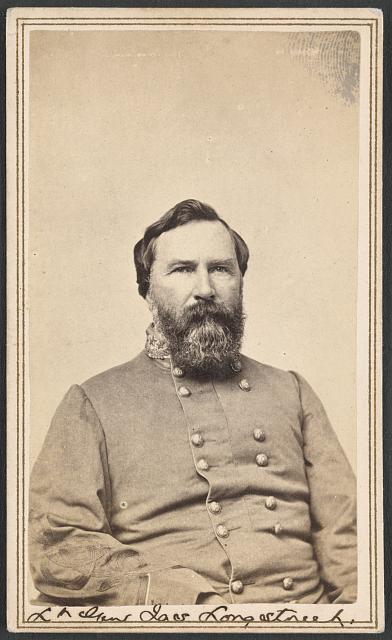 Son of Ann Magruder — A Line Connected to the MacGregor Heritage
James Titus Longstreet’s heritage is deeply shaped by his mother, Ann Magruder, whose family belonged to one of the most enduring and historically significant Scottish-descended lineages in early America. The Magruder family traces its origins to the MacGregor clan, a Highland Scottish clan known for perseverance, fierce independence, and a long history marked by royal proscription and survival against political suppression.
The Magruders were among the earliest Scottish families to establish themselves in colonial Maryland. Their immigrant ancestor, widely recognized in genealogical scholarship, arrived in the mid‑17th century and quickly became part of the region’s civic and social leadership. By the time of Ann Magruder’s birth, the Magruder family had already produced multiple generations of landowners, military officers, civic leaders, and churchmen — a tradition of service that would continue through her son.
Ann married James Longstreet Sr., a respected farmer and planter of the Edgefield District in South Carolina. Although her life was anchored in the American South, Ann maintained the heritage, values, and stories passed down through the Magruder line. Her family’s Scottish identity, preserved even after generations in America, connected her children to a lineage far older than the nation itself.
This maternal heritage significantly shaped her son, James Titus Longstreet, during his formative years. Family letters and recollections suggest that Ann emphasized duty, discipline, and quiet perseverance — qualities reflected strongly in Longstreet’s later military career. After the early death of her husband, she guided the family through a difficult transition, relocating with her children to Somerville, Alabama, where she supported her son’s pursuit of a West Point appointment and a military life.
Today, Ann Magruder’s lineage links General Longstreet directly to the Magruder–MacGregor heritage preserved and celebrated by the American Clan Gregor Society. The society, founded in 1909, recognizes families descending from both the historic Scottish Clan Gregor and its American branches, including the Magruders. Longstreet’s ancestry through his mother places him within that extended kinship — rooted in Scotland, forged in colonial Maryland, and carried forward through generations of American history.
Civil War Service
Longstreet rose rapidly through the Confederate ranks. His major assignments included:
- Brigadier General, CSA (June 17, 1861)
- Commanding a brigade in the 1st Corps, Army of the Potomac (July–October 1861)
- Major General, CSA (October 7, 1861)
- Commanding a division in the Department of Northern Virginia (1861–1862)
- Commander, First Corps, Army of Northern Virginia (various periods from 1862–1865)
- Lieutenant General, CSA (October 9, 1862)
- Detached commander in the Department of Virginia and North Carolina (1863)
- Commander of a wing of the Army of Tennessee at Chickamauga (1863)
- Commander, Department of East Tennessee (1863–1864)
He participated in nearly every major campaign in the Eastern Theater.
As brigade and later division commander, Longstreet fought at:
- Blackburn’s Ford
- First Bull Run
- Yorktown
- Williamsburg
- Seven Pines
- The Seven Days Battles (briefly directing A.P. Hill’s division in the closing stages)
By 1862, he was effectively commanding a full corps, although the Confederate Congress did not formally authorize corps until later that year. In this capacity, he earned a reputation for solid, methodical generalship at:
- Second Bull Run
- South Mountain
- Antietam
- Fredericksburg
Gettysburg and the Western Detachment
Longstreet became the senior lieutenant general of the Confederacy and one of Lee’s most trusted subordinates. At Gettysburg, Longstreet opposed Lee’s plan for direct assaults on the Union position and instead argued for maneuvering the Federal army out of its strong defensive ground. His preference for using the strategic offensive paired with the tactical defensive — a concept validated in many later military doctrines — was not adopted, and the Confederate assaults of July 2 and 3 were repulsed.
Detached to the Western Theater, Longstreet played a key role at Chickamauga on September 20, 1863, where his wing delivered the breakthrough that routed part of the Union line. Disputes over the aftermath with General Braxton Bragg led to his reassignment to East Tennessee, where his independent operations, including the siege of Knoxville, were less successful.
Returning to Lee in 1864, Longstreet was accidentally wounded by his own troops during the Battle of the Wilderness. He resumed corps command later that year around Petersburg and remained with Lee until the surrender at Appomattox. Lee affectionately referred to him as his “Old War Horse.”
Later Years
After the war, Longstreet forged a surprising but genuine friendship with Ulysses S. Grant, whose generosity during and after Appomattox left a deep personal impression. Longstreet also aligned politically with the Republican Party, a choice that cost him standing among many former Confederates.
He held several notable federal posts, including:
- U.S. Minister to the Ottoman Empire (appointed by President Grant)
- U.S. Commissioner of Pacific Railroads (appointed by Presidents McKinley and Roosevelt)
In 1896 he published From Manassas to Appomattox, his memoir defending his wartime record and challenging some of his critics’ narratives. Longstreet outlived most of his Civil War contemporaries, passing away on January 2, 1904, in Gainesville, Georgia, where he is buried.
Connection to the Magruder Line — and to Clan Gregor Heritage
Through his mother, Ann Magruder, General Longstreet stands within a lineage that traces back to the historic Magruder family of colonial Maryland — a family of Scottish origin descending from the Clan MacGregor tradition. This heritage is celebrated today by descendants and researchers through the American Clan Gregor Society, formed in 1909 to preserve the genealogical, cultural, and historical legacy of the MacGregor and Magruder lines in America.
Maternal Lineage of General James T. Longstreet through Ann (“Nancy”) Magruder
General James Titus Longstreet (1821–1904)
His maternal line flows through a long‑established Maryland family of Scottish origin, connecting him directly to the Magruder/MacGregor heritage honored today by the American Clan Gregor Society.
Mother: Mary Ann Dent
Born in 1792 in Maryland, Mary Ann Dent married James Longstreet, Sr. in 1814 and later became the mother of General Longstreet.
Grandmother: Ann (“Nancy”) Magruder
Mary Ann’s mother, Ann (“Nancy”) Magruder, was born around 1760 in Maryland. She later moved with her family to Georgia, where she died in 1807. She represents the Magruder line through which Longstreet inherits his MacGregor ancestry.
Great‑Grandparents: Alexander Howard Magruder & Jane Trueman
Ann’s parents were Alexander Howard Magruder and Jane Trueman, members of a well‑established Maryland family whose roots stretch back to the earliest colonial period.
2× Great‑Grandparents: Capt. Samuel Magruder & Sarah (Beall/Mills)
The next generation back includes Capt. Samuel Magruder, a prominent Maryland landholder of the late 17th and early 18th century, and his wife Sarah, recorded in early genealogies of the colonial Magruder family.
3× Great‑Grandfather: Alexander “the Immigrant” Magruder
At the foundation of this line is Alexander “the Immigrant” Magruder, born around 1610 in Perthshire, Scotland, and transported to Maryland by the early 1650s. He established the Maryland Magruder family whose descendants include many prominent Americans—including General James Longstreet.